Some places are known for fashion. Others for history.
But Kanchipuram? It’s both a living, breathing museum where silk and stone whisper stories from centuries past.
The moment you enter this ancient Tamil town, there’s a certain calm that hits you part temple bell, part weaving loom. It’s the sound of a city that hasn’t just survived history… it’s woven it.
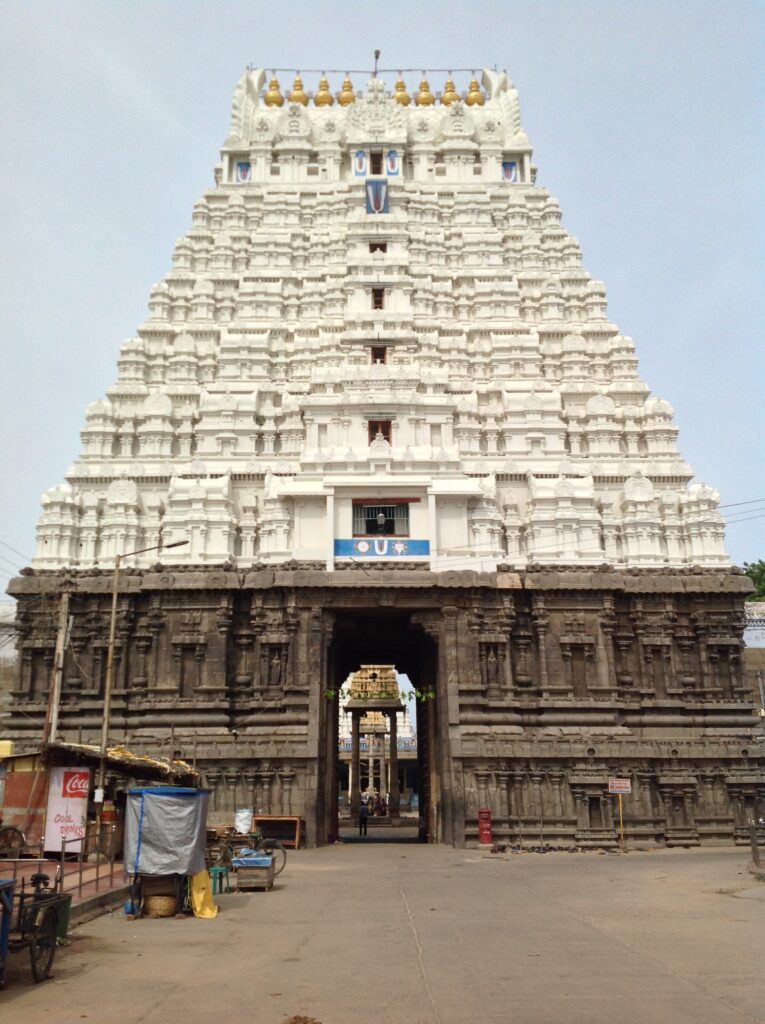
They call Kanchipuram the “City of a Thousand Temples” and for good reason. Nearly every street has a shrine, and every shrine tells a story. The air feels heavier here, not from pollution, but from prayer.
The Kailasanatha Temple, the oldest of them all, stands like a stone sculpture of eternity. Its carvings are so intricate, you half-expect them to start speaking. Then there’s the Ekambareswarar Temple, where a 3,500-year-old mango tree is believed to have witnessed centuries of devotion.
And when the afternoon light hits the Varadaraja Perumal Temple, you suddenly understand why kings once competed to build grander gopurams here because beauty, in Kanchipuram, was a form of worship.
But just a few lanes away from these towering temples, another kind of magic happens quieter, but just as divine.
Inside small, modest homes, the rhythmic clack of looms fills the air. The weavers of Kanchipuram, generations of artisans sit cross-legged, creating what the world knows as the Kanchipuram silk saree.
It’s not just fabric. It’s architecture in thread.
Each saree is handwoven, often taking days or weeks. The body, border, and pallu are woven separately and then joined so seamlessly that even a microscope would struggle to find the junction.
And those motifs? They’re not random. Temple towers, mango leaves, peacocks, elephants, every design is a small story borrowed from the city itself. The sarees of Kanchipuram don’t just decorate women; they carry centuries of art, mythology, and craftsmanship.
People often ask, “Why are Kanchipuram sarees so expensive?”
The answer lies in three words: purity, precision, and pride.
Pure mulberry silk, genuine zari (silver dipped in gold), and a weaving process so precise it can’t be rushed. Every thread, knot, and motif is done by hand. No shortcuts. No mass production.
Each saree is a piece of legacy something you don’t just wear, but inherit. That’s why grandmothers pass them down like family heirlooms. In a fast-fashion world, Kanchipuram sarees are slow, soulful, and eternal.
Let’s be honest Kanchipuram has saree shops on every corner. Some are pure gems, others… not so much.
If you want the real deal, start with:
Co-optex and Tamil Nadu Handloom House (authentic, government-run, and quality-assured).
Pro tip: Always check for the Silk Mark tag. It’s your guarantee that you’re buying pure silk, not synthetic blends pretending to be fancy.
And yes bargaining is okay, but respect the craft. When someone has spent days weaving your saree, haggling like you’re buying keychains at a beach stall just feels wrong.
Kanchipuram isn’t a place you just visit it’s a place that stays with you.
Its temples remind you of faith. Its sarees remind you of patience. Together, they show you what happens when art and devotion share the same address.
In a world chasing speed, Kanchipuram stands still quietly teaching us that some things are beautiful because they take time.
So, whether you go there to pray or to shop, you’ll come back with more than silk. You’ll return with stories, colors, and a piece of heritage you can literally wrap around yourself.
Some cities tell their tales in books or museums.
Kanchipuram tells it through the folds of a saree and the curves of a temple.
It’s where silk meets stone and tradition meets eternity.
